Timebomb: A Modern Blackletter Font with Attitude
There's a particular kind of energy that only Blackletter typography can deliver. It's bold, unapologetic, and carries centuries of visual weight behind every stroke. But traditional Blackletter fonts can feel stuck in the past—beautiful, sure, but sometimes out of step with contemporary design needs. That's where Timebomb enters the conversation. This modern Blackletter display typeface takes the dramatic flair of old-world calligraphy and filters it through a distinctly current lens, giving designers and creatives something that feels both timeless and fresh.
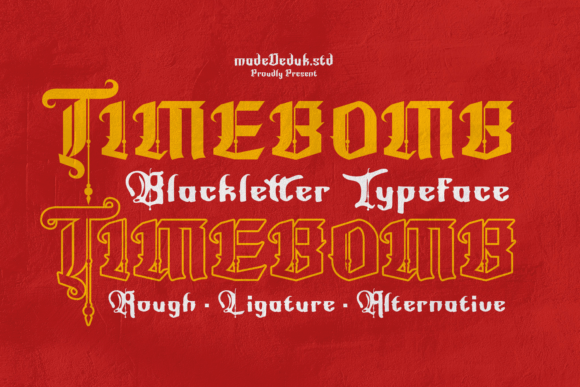
What makes Timebomb stand out isn't just its visual punch. It ships in both regular and rough versions, which means you can dial in exactly the level of grit or polish your project demands. The regular version delivers clean, sharp letterforms with that unmistakable Blackletter structure—pointed arches, heavy strokes, and intricate details that command attention. The rough version introduces texture and imperfection, adding an organic, hand-crafted quality that works beautifully for projects aiming for authenticity or edge. Between the two, you've got remarkable versatility for a single typeface family.
Where Blackletter Meets Modern Branding
Blackletter fonts have a reputation problem. Some designers dismiss them as overly ornamental or too niche for everyday use. But the reality is that brands across industries—from streetwear labels to craft breweries to music festivals—actively seek out typefaces with this kind of character. Timebomb fits squarely into that sweet spot. It carries the visual authority of traditional Blackletter while offering alternates that give it a modern, almost rebellious personality.
Think about tattoo shops that need signage and business cards that reflect the artistry inside. Or a craft beer label that needs to stand out on a crowded shelf without looking like every other minimalist design. Timebomb's strong flair and detailed alternates make it a natural fit for these contexts. The font does the heavy lifting of establishing mood and identity before a single word is actually read—exactly what a good display typeface should do.
For band logos and album artwork, the appeal is obvious. There's a reason Blackletter has deep roots in music culture, from heavy metal to hip-hop. Timebomb taps into that visual language while feeling contemporary enough to avoid looking like a throwback. Whether you're designing a tour poster, merch graphics, or a Spotify canvas, this typeface brings the kind of presence that smaller, more restrained fonts simply can't match.
Practical Applications Beyond the Obvious
While tattoo shops and drink labels might be the first things that come to mind, Timebomb's usefulness extends well beyond those applications. Consider packaging design for premium or artisanal products—hot sauces, small-batch spirits, specialty coffee. A Blackletter display font signals craftsmanship and care. It tells customers that the people behind this product pay attention to details. Paired with the right color palette and layout, Timebomb can elevate a package from forgettable to shelf-stopping.
Fashion apparel is another space where this typeface thrives. Screen-printed hoodies, embroidered hats, hang tags—these are all contexts where a bold, character-rich font adds tangible value. The rough version works especially well here, mimicking the slightly imperfect quality of ink on fabric or thread on cloth. It feels handmade without sacrificing legibility at the sizes these applications typically require.
For book covers and game design, Timebomb offers that dramatic, story-driven quality that draws readers and players in. Fantasy novels, thriller covers, indie game titles on Steam—these projects benefit from typography that immediately communicates genre and tone. A well-chosen display font can do more marketing work than a paragraph of description ever could.
Making It Work in Digital Spaces
Here's where some designers hesitate with Blackletter fonts: the digital world. Can a typeface this ornate function on a website header? In a social media graphic? As part of a digital product's visual identity? The short answer is yes, but with intention.
Timebomb works best in digital spaces when used strategically—as a headline font, a logo element, or a pull quote treatment. It's not meant for body copy or long-form reading. That's not a limitation; it's a role. Every strong design system needs contrast between display and text typefaces. Timebomb occupies the display role with confidence, and when paired with a clean sans serif font or a simple serif font for supporting text, the result can be striking and highly readable.
For social media graphics, think about how this typeface could work for a fitness brand's Instagram posts, a musician's Spotify playlist covers, or a lifestyle brand's Pinterest pins. The key is using it at a size where its details are visible and impactful. Shrink it too small and you lose the magic. Keep it large and let it breathe, and it becomes a visual anchor that stops the scroll.
On websites and blogs, Timebomb can serve as a hero section headline, a section divider, or a decorative element in a landing page. It pairs particularly well with geometric sans serifs for a high-contrast, modern aesthetic. If your brand identity leans bold and unconventional, this kind of typographic pairing can become a signature visual element that audiences start to recognize and associate with your content.
Choosing the Right Version and Testing Your Pairings
One of the most practical advantages of Timebomb coming in both regular and rough versions is the flexibility it gives you during the design process. Start by considering the tone of your project. A luxury brand might prefer the cleaner regular version, while an underground music label or a vintage-inspired clothing brand might lean into the rough version's texture and grit.
Don't skip the pairing process. A display font like Timebomb doesn't exist in isolation—it needs a complementary typeface for body text, captions, and smaller interface elements. Try it alongside a neutral sans serif like a geometric or humanist option. Test it with a clean serif for editorial layouts. See how it behaves next to a script font or handwritten font if your project calls for a more eclectic typographic system. The goal is contrast without conflict. Timebomb is loud, so its partner should be quieter—calm, structured, and easy to read at length.
Pay attention to readability at different sizes. Display fonts are designed for large-scale use, so always preview your work at the intended output size. What looks magnificent at 72pt on your monitor might become muddy at 18pt on a printed hang tag. The rough version, in particular, benefits from generous sizing to preserve the detail and character of its textured strokes.
Licensing and Long-Term Value
If you're a small business owner or creative entrepreneur, licensing is a practical consideration that's easy to overlook in the excitement of finding the right font. Before purchasing any premium font, confirm that the license covers your intended use—whether that's commercial printing, digital distribution, merchandise, or client work. Most quality typefaces like Timebomb come with clear licensing terms, but it's worth reading the details so there are no surprises down the road.
Think of a strong display typeface as a design asset with a long shelf life. A font like Timebomb isn't a one-project purchase. Once it's part of your toolkit, it can serve across campaigns, product lines, seasonal promotions, and evolving brand expressions. The alternates and multiple versions extend that value further, giving you variety without needing to buy additional typefaces every time you want a slightly different look.
For marketers, content creators, and bloggers, having a distinctive headline font in your visual toolkit saves time and strengthens consistency. Instead of hunting for a new typeface every time you create a YouTube thumbnail, a newsletter header, or a promotional poster, you already have something that fits your brand's personality. That kind of typographic consistency builds recognition over time—your audience starts to associate that visual style with your content before they even read a word.
Final Thoughts on Bringing Bold Typography into Your Work
Typography choices send signals. They communicate mood, quality, and intention in ways that often register with audiences before conscious reading kicks in. Timebomb offers a specific kind of signal: bold, confident, rooted in tradition but unafraid to push forward. Whether you're designing a logo for a new brand, laying out a poster for an event, or building a visual identity for a product line, having a typeface like this in your collection gives you an option that most default font libraries simply don't provide.
The real test of any font isn't how it looks in a specimen sheet—it's how it performs in context. Download it, experiment with the alternates, try both versions, test your pairings, and see how it holds up across the actual applications you work on most. Good typography isn't about following rules. It's about finding the right voice for the story you're telling. Timebomb gives you a voice that's hard to ignore.