Lochta: Weaving Dark Fantasy into Your Visual Narrative
There’s a specific feeling you get when you stumble upon a design element that feels less like a tool and more like a piece of storytelling. It’s that moment when a typeface doesn't just spell out a word, but whispers a secret, evokes a memory, or sets a scene before you’ve even read the full sentence. For those of us working in the realms of fantasy, dark academia, or any project that thrives on a touch of the mystical, finding a font that carries that weight is like discovering a hidden key. This is the space where Lochta lives and breathes—a typeface that doesn't just display letters, but conjures atmospheres.
The Anatomy of an Enchanted Typeface
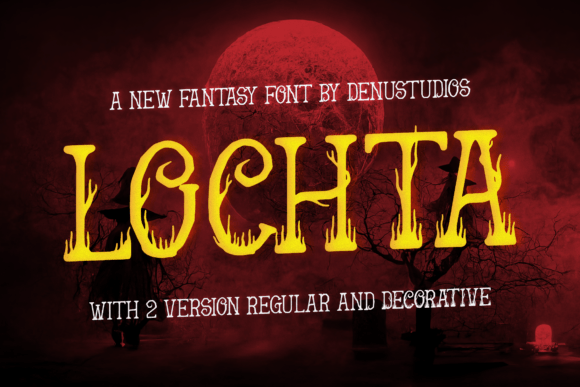
At first glance, Lochta announces its personality. It’s a display font that leans heavily into its dark fantasy roots, characterized by what can only be described as haunting, vine-like terminals and jagged, atmospheric silhouettes. Imagine the gnarled branches of an ancient, enchanted forest or the elegant, sharp script found in a forgotten grimoire. The letterforms have a distinct, organic flow, yet they carry an undeniable edge—perfect for capturing that balance between elegance and peril that defines so much of the fantasy genre.
This isn't a serif font for body text or a clean sans serif font for minimalist web design. Lochta is a premium font built for impact. Its visual character is its primary asset, making it an exceptional choice for projects where the typography itself needs to be a focal point of the design. Think of it as a visual shortcut to establishing a specific mood: dark, magical, and deeply intriguing.
Practical Magic: Where to Cast This Spell
So, where does a font with this much personality find its home? The applications are surprisingly versatile for creatives and businesses looking to build a brand identity steeped in narrative.
- Fantasy Book Covers & Editorial Design: This is Lochta’s native environment. It can instantly signal genre to a potential reader, setting expectations for the world inside. It works beautifully for title treatments, author names, and chapter headings, adding a layer of immersion from the very first touch.
- Branding for Niche Businesses: For a small business owner running a candle company with themes of witchcraft and herbalism, a tabletop RPG publisher, or a boutique selling occult-inspired jewelry, Lochta becomes a cornerstone of the brand identity. Use it for your logo, packaging headers, and website banners to create a cohesive and atmospheric customer experience.
- Event & Digital Product Design: Halloween branding is an obvious fit, but think further. It’s powerful for fantasy-themed event invitations, concert posters for atmospheric metal or folk bands, and even as a stylistic header font for a blogger writing about dark folklore or mythology. For digital products like printable art or journal covers, it adds a professional, curated feel.
- Gaming & Cinematic Interfaces: The font’s aesthetic is tailor-made for RPG game interfaces, title screens, and cinematic movie titles. It helps build the world before gameplay even begins, suggesting lore, danger, and adventure.
- Social Media & Marketing Assets: In a crowded feed, a distinctive font stops the scroll. Using Lochta for key quotes, campaign headers, or promotional graphics on platforms like Instagram or Pinterest can dramatically increase engagement by appealing directly to a target audience that resonates with this aesthetic.
Building Cohesion and Recognition
From a strategic design perspective, incorporating a distinctive typeface like Lochta does more than just look good. It directly contributes to visual consistency and brand recognition. When your audience sees that unique, jagged silhouette across your website, your social media graphics, and your physical packaging, it creates a powerful mental shortcut. They begin to associate that specific visual style with your brand’s story and values.
This is where the concept of font pairing becomes critical. Lochta is a star performer, but it needs supporting cast. Pair it with a highly readable serif font or a clean sans serif font for body copy. The contrast will allow Lochta to shine for headlines and key messaging without sacrificing readability for longer text. For example, a classic serif like Playfair Display or a sturdy sans serif like Montserrat can provide the perfect grounding counterpart.
A Designer’s Practical Checklist
Before you dive in, a few practical considerations will ensure you use this creative font to its full potential.
- Test Thoroughly: Always test a font in context. Type out the specific words or names you plan to use. Does the word “Shadow” look as compelling as “Magic”? Check the kerning (space between letters) and ensure the unique letterforms don’t create awkward collisions in your specific text.
- Review Included Styles: Does the font family include multiple weights or styles (e.g., regular, bold, italic)? These variations can provide valuable flexibility within your design system, allowing for hierarchy while maintaining the core aesthetic.
- Consider Your Medium: A font that looks stunning on a book cover might become illegible at very small sizes on a mobile website. Think about your primary use cases. Lochta excels at large sizes where its details can be appreciated, so plan to use it for headlines, logos, and feature graphics, not for fine print.
- Licensing is Key: If this is for a commercial project—a client’s logo, a product you sell, a monetized YouTube channel—ensure you have the correct commercial font license. Purchasing from a reputable foundry or marketplace usually covers this, but always double-check the terms to avoid legal headaches down the line.
The Final Incantation
Choosing typography is an act of curation. It’s about selecting tools that don’t just perform a function but contribute to the soul of your project. Lochta is more than a typeface; it’s a design asset for storytellers. It offers a direct line to a specific emotional resonance—mystery, ancient power, and dark elegance. For the designer, the small business owner, or the content creator looking to build a world with their visuals, it provides a foundational piece of that puzzle. By understanding its character and applying it thoughtfully alongside complementary fonts, you can create designs that don’t just capture attention, but hold it, inviting your audience into the very atmosphere you’ve worked to create.